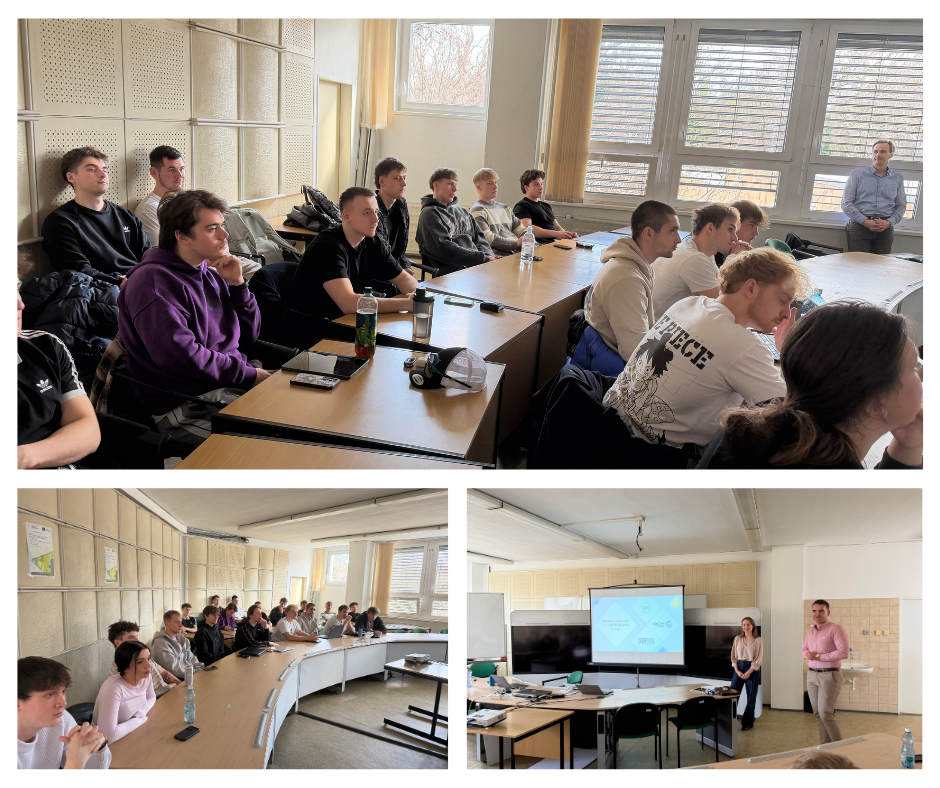
Elective Course: Skills for Success: From University to the Workplace in collaboration with the American Chamber of Commerce in Slovakia and BSCF.
The transition from university to the workforce shows that graduates’ success is determined not only by technical knowledge but, above all, by soft skills—the ability to communicate, collaborate, and solve problems. The Faculty of Business Management is responding to this need through close collaboration with companies affiliated with the American Chamber of Commerce in Slovakia. Companies within the Business Service Center Forum (BSCF), which employ nearly 36,000 people, have identified communication skills as among the most important—yet also the least developed—skills among graduates.
Based on these requirements, a course was developed focused on building practical skills applicable across various industries. Students learn to think critically, make decisions, manage their time effectively, and resolve conflicts in the workplace. Emphasis is also placed on communication, working with feedback, and the ability to function in virtual teams.
The course also incorporates approaches such as Design Thinking, which promotes creative problem-solving and innovative thinking. Students thus acquire practical tools that enable them to better respond to the challenges of the modern workplace.
So how does this combination of design thinking and decision-making work? The classic decision-making process should begin with a design thinking tool when defining the problem. This phase is neither a luxury for creative people nor a waste of time; it is a tool for reducing the risk of making a bad decision.
One of the most valuable contributions of design thinking to decision-making is a culture of rapid prototyping. Instead of lengthy analysis, managers learn to make small, simple decisions [tests] and monitor the impact.
To be precise, design thinking does not replace a manager’s analytical thinking or financial literacy; it complements them. Strong decisions arise when hard data meets the decision-maker’s understanding. A manager who masters design thinking does not ask, “What is the right solution?” but rather “Are we addressing the right decision-making problem?”
And that is the difference that shows up in the results.
Thanks to the integration of the academic environment with real-world practice, students graduate equipped not only with knowledge but, above all, with skills that give them a real competitive advantage in the job market.